Pharma & Strategy
Merck Deal Interest: A Keytruda Ecosystem Expansion Signal
What’s happening
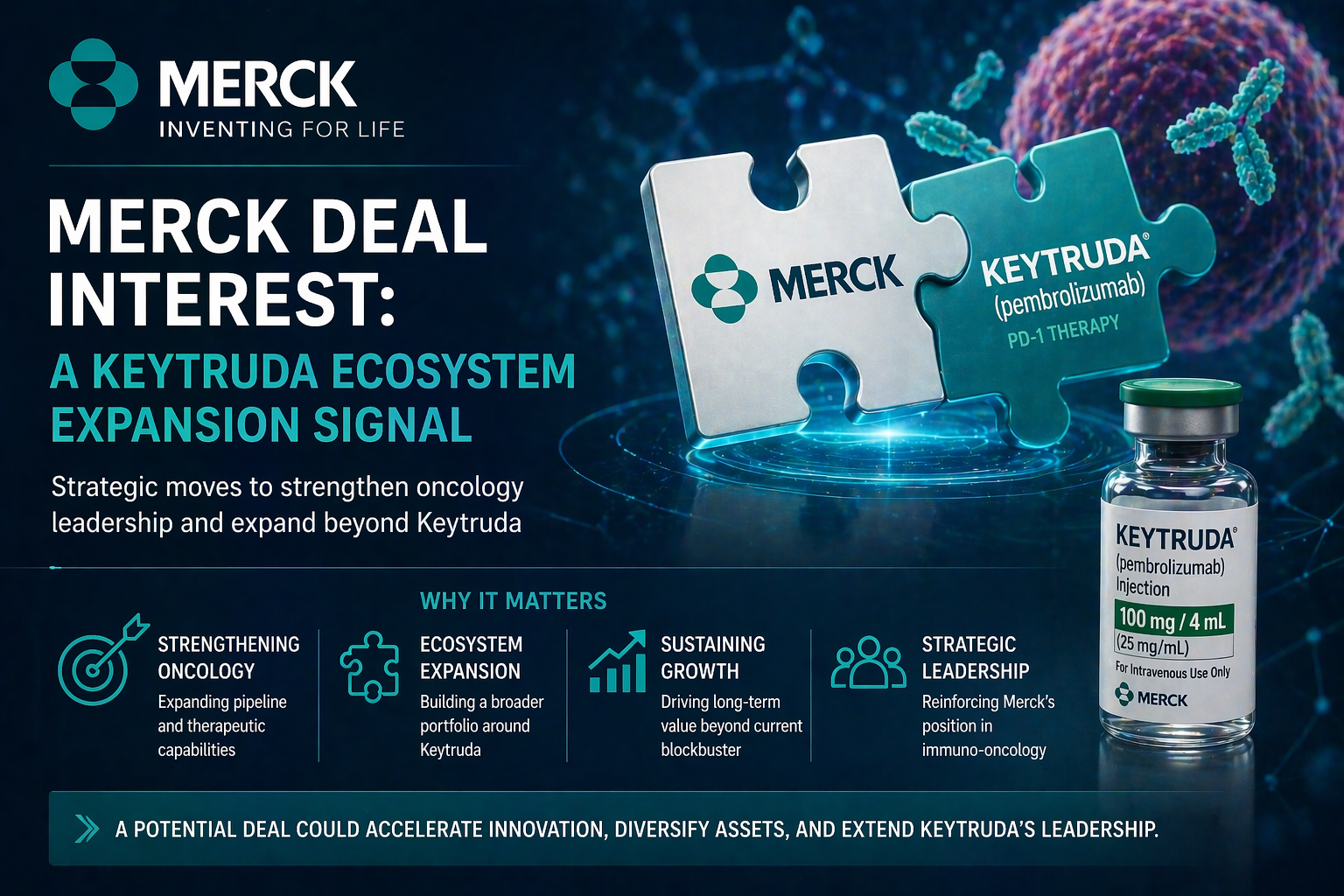
Merck & Co. has reportedly joined a shortlist of major drugmakers, including Japan’s Ono Pharmaceutical and Germany’s Merck KGaA, expressing interest in acquiring Inhibrx Biosciences. The interest centers on INBRX-106, an experimental cancer treatment currently being tested in combination with Merck’s flagship immunotherapy, Keytruda. The potential deal could be valued at over $8 billion.
What’s changing / Business impact
- Aggressive External Sourcing: As the 2028 patent cliff for Keytruda looms, Merck is accelerating its strategy of acquiring or licensing external assets to "bracket" its existing blockbuster.
- Combination Strategy: The focus is shifting from mono-therapies to "combination ecosystems" where new drugs (like INBRX-106) boost the efficacy and extend the patent life of existing immunotherapy platforms.
- Deal-Driven Pipeline: Merck’s recent $6.7 billion acquisition of Terns Pharmaceuticals and interest in Inhibrx signal a pivot toward assembling a mid-to-late stage oncology portfolio through M&A.
Why this matters
Pharma growth is increasingly driven by external innovation, not internal R&D alone.
This trend highlights the new rules of the pharma game:
- Big Pharma is now a "curator" of innovation; sustaining multibillion-dollar pipelines depends entirely on constant deal-making.
- Competitive advantage lies in the ecosystem expansion around blockbuster drugs, creating layers of clinical benefit that generics cannot easily replicate.
- Valuations for biotech firms are becoming highly sensitive to their compatibility with existing "standard of care" platforms like Keytruda.