Policy & Payers
Medicare Obesity Drug Coverage Delay: A Payer Friction Signal
What’s happening
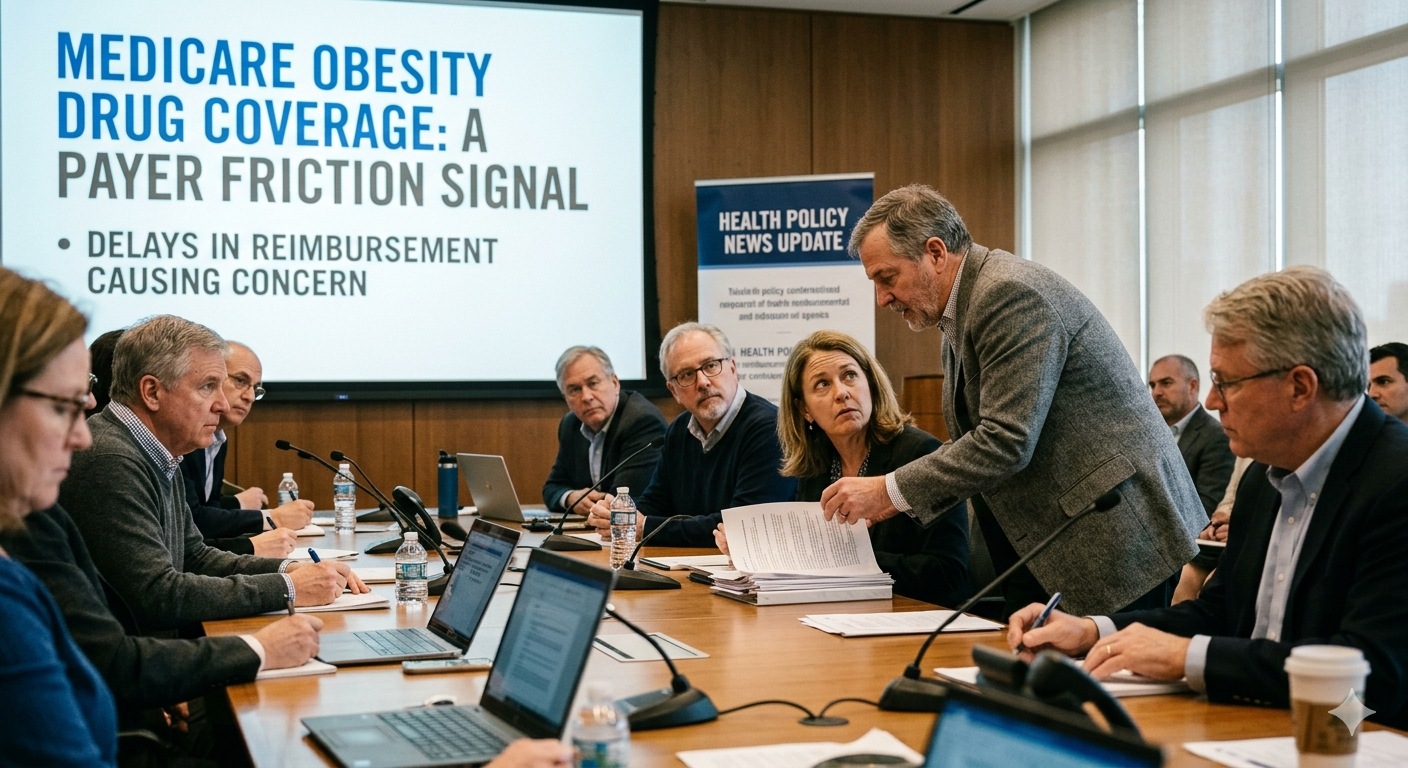
The Centers for Medicare & Medicaid Services (CMS) has officially delayed the Part D launch of the BALANCE Model, a high-profile pilot program aimed at bypassing statutory prohibitions to cover obesity drugs, until January 2027.
To prevent a total loss of access, CMS will maintain the "Medicare GLP-1 Bridge" program from July 1, 2026, through December 31, 2027, allowing eligible beneficiaries to access these medications for a $50 copayment outside the standard Part D structure.
What’s changing / Business impact
-
Strategic Hesitation: Major insurers like CVS and UnitedHealth opted out of the primary BALANCE pilot, citing "structural challenges" and financial risk.
-
Short-term Stability: Near-term demand is blunted but protected by the bridge program; however, permanent integration into the Medicare benefit remains uncertain.
-
Operational Shift: Because the bridge program operates outside Part D, beneficiary costs won't count toward the new $2,100 out-of-pocket spending cap, potentially impacting patient stickiness.
Why this matters
GLP-1 drugs are the biggest demand drivers in U.S. healthcare, but clinical success doesn't guarantee payer adoption.
This delay highlights critical friction in the market:
-
Coverage expansion is a negotiation, not an automatic update; it requires deep alignment with payer risk models.
-
Even "blockbuster" therapies face massive policy hurdles when they challenge existing statutory bans.
-
Long-term market scaling is determined by the reimbursement system's plumbing, not just patient results.